What it’s leading up to – the competition
So far we have noted the vital importance of two things – Communication with the athletes of all ages who do need to know what is expected of them over the next six months at least, and communication between coaches to share the load within the club.
As far as the first is concerned, the year is usually divided into the winter conditioning and technique development, the pre-season when the gradual switch to faster, higher or further event demands is made, and the competition season which leads to the peak performance which is often the Scottish Championships. Winter for athletics training purposes goes from October to the end of March. It is for all athletes six months of preparation with an interim target of the national cross-country championships. There used to be – and may still be – qualifications leading to strength training using running methods, and strength training using gym and weight training. Running methods include steady running, hill reps and track interval training. The Thistle Cross-Country Award was a ten week block of training which included points awarded for attending club training sessions up to four a week for the U17’s but the younger ones usually targeted two a week; a time trial over 1000 metres whenever the coach decided it should be included – we did it every two weeks; and races – these races could be club races, even races organised for training purposes, open races, and championship races. Points can be ignored for now but the ingredients of steady runs, time trials, races and track sessions are easily arranged and form a solid base. The interval training need not be on a track – up the clock sessions on a grassy field, shuttle relays, handicap runs are all good additions to training. The handicaps over say 50 yards are always good fun as well as hard work. Gym work can also be added but that’s maybe a separate topic.

The technique is the thing! Do all the athletes have the correct technique – like this athlete does – for their event?
After the National Cross-Country Championships, specific training is the order of the day. Older athletes from Under 17 will know what group of events will be their forte and can concentrate on that. The younger ones can and should cover a range of events – such as those done for the Thistle Awards where the most popular events were the 100m/shot putt/long jump and the gold, silver and bronze awards won. The U14 and U15 athletes cover the basic techniques for all the groups – sprint starts, sprinting technique, working out their approach and technique for the jumps and throws can be added and varied. I know of two clubs that have all younger athletes jogging four laps of the track as part of their warm up every session. This has the benefit that if the club is short of a 1500m runner in a League match, they can ask pretty well any athlete to do it – “After all it’s just what you do in training; just run over it!” The pre-season is opften between seven and eight weeks and may well over lap the first League matches.
There is then the competition season when they will all take part in school, local and maybe even district and national championships. Maybe more on that later 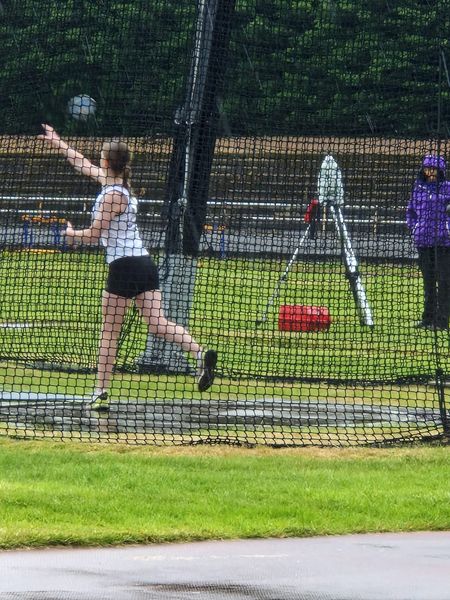 .
.