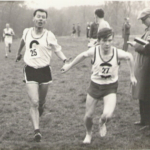
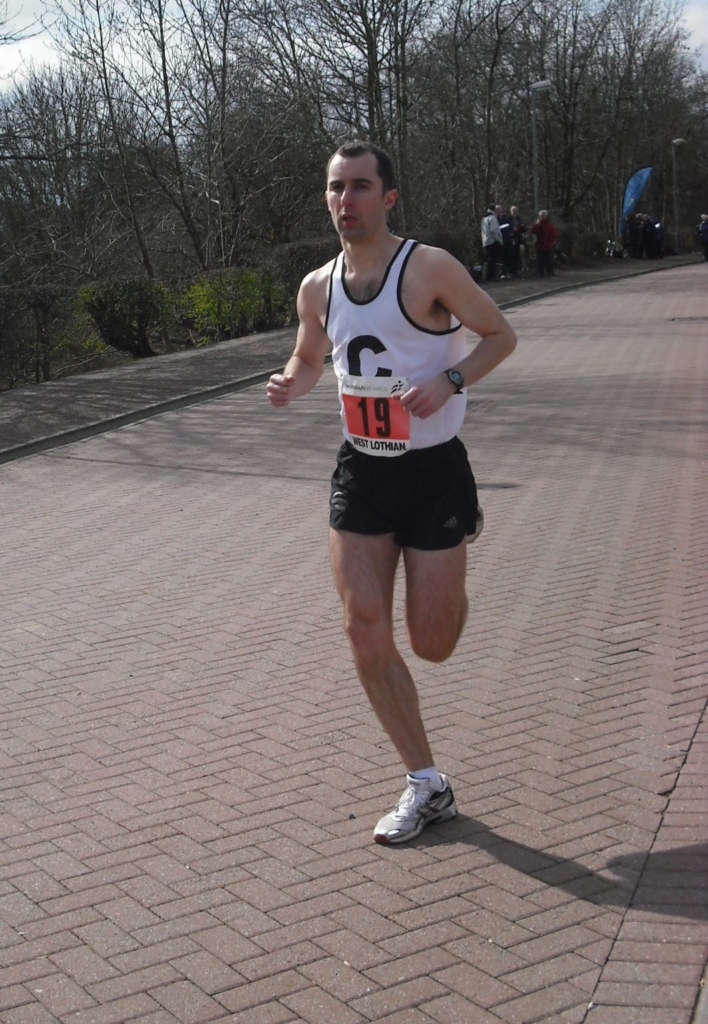
Running in the Six Stage Relays in 2011
Iain Robertson has been a member of Clydesdale Harriers since the end of the 1980’s and been the kind of member that all clubs need – a regular attender on training nights, a runner who is dependable and gives his best every time out; if he is prepared to be elected to the committee then that’s a bonus. Iain ticked all the boxes. We all knew that Ian was a good runner but no one expected the degree of excellence in track running that he displayed when he became a 35 year old competitor in Masters events. We will come to that later but we should start with his own view of his career and his attitude to the sport as explained in his replies to the questionnaire.
Name: Iain Robertson
DoB : 18/01/1978
Club/s: Clydesdale Harriers
Occupation: Chartered Surveyor
Events: 800m to Half Marathon
Personal bests?
400m: 55.17 Kilmarnock, 2016
800m: 2.01.20 Gothenburg, Sweden 2012
1500m: 4.12.61 Gothenburg, Sweden 2012
3000m: 9.55.24 Grangemouth 2010
5k: 17.39 Dunky Wright Road Race 2009
10K: 37.30 Glasgow 2008
Half Marathon: 1.23.43 Balloch to Clydebank 2010
Can you give some details of sporting activity development:
How did you get into the sport initially?
In first year at Braidfield High School, I volunteered to take part in a schools cross country race at Braidfield Farm. After the race, my P.E. teacher, Mr Chudleigh, asked me if I’d enjoyed it. I said I had and he then pointed me in the direction of Derek McGinley who was there watching the races. I spoke to Derek and he invited me and a couple of my friends to come down to Whitecrook the following Tuesday. I went down to the club on the Tuesday and met the other boys Derek was coaching, they were a good group. Derek told me a bit more about the training and competitions I could get involved in. I decided that I wanted to be a part of it, so I became a Clydesdale Harrier.
Has any individual or group of individuals had a marked influence on your attitude or performances?
Derek McGinley – Derek was the first big influence in my early years getting to know the sport. He was generous with his time and you felt like he genuinely cared about athletics and the athletes he was coaching. He was always there with a bit of advice or encouragement and he taught you about discipline and etiquette as well as how to train. I remember being surprised one morning when I was running a 1500m race at Braidfield High in the school sports. Shortly before the race started, Derek appeared at the side of the track to watch. He didn’t have to do that, but I really appreciated it.
I had drifted away from the sport after I left school and went to University. After I graduated, I started doing a bit of running again to improve my fitness. A short while later I met Derek by chance in Clydebank. He was pleased when I told him I’d been running again. He told me about a training group who went to Clydebank Business Park on a Tuesday and said I’d be welcome to come along. I didn’t realise quite how high the standard of training was until I went along. Allan Adams, Charlie Thomson and James Austin were all regulars. I was out of my depth but the guys made me feel welcome. I joined in and certainly got fitter!
Derek played a big part in my return to Clydesdale after a few years out. He later said to me that one of his aims was to see the boys he’d coached go on to run as seniors. I was pleased that Derek saw me run as a senior and I will always appreciate what he did for me.
Phil Dolan – I think I was about 28 years old when Phil asked if I’d like to train with his group on Tuesday nights. I went along and it soon became Tuesdays and Thursdays. Phil’s training methods were more focused and structured than what I’d been doing before and it really opened my eyes. His initial assessment of me was that I should be running faster and if I followed his advice, I would. There were a few talented young athletes in the group at the time including Peter Bowman and Ryan Savage. I enjoyed the training and I was able to see improved results pretty quickly. Phil’s advice and influence changed my perceptions of what I was capable of and over the next few years, I would say that my running improved significantly.
Phil has been the biggest influence on me in my athletics career. He taught me a lot about preparing for races, adapting the training to suit different circumstances. He’s provided me with endless support, guidance and encouragement. I’ve learned a lot from hearing about his experience in the sport. I knew I would never get to the level that Phil achieved, but he made me believe I could be better and to work hard to achieve my own personal goals. His training is always fun and he’s never short of a tale to tell, he makes it enjoyable. All of my PBs have been achieved under Phil’s guidance but perhaps even more importantly, Phil’s judgement in the build up to key races is excellent. He has helped me to reach my season’s best performance at just the right time on many occasions. He has clearly helped me to be a better runner and get a lot more out of the sport.
Something about attitude:
What exactly did you get out of the sport?
I’ve really enjoyed being part of the sport. I was never the fastest but I felt it was something I could do reasonably well. I’ve tried lots of different sports and activities but athletics is the only sport I’ve really taken seriously in a competitive sense. I liked the challenge and the satisfaction of feeling that I’d achieved something. Over the years, it’s helped my physical health and my mental wellbeing. I’ve met some great people and travelled to lots of different places so it’s given me a lot of experiences that I wouldn’t have had otherwise.
Can you describe your general attitude to the sport?
I think my general attitude is to have a healthy lifestyle and to participate to the best of my ability. I place more importance on being involved in the sport rather than being the best, but I like to think I always try my best. I particularly enjoy the team events like relays and league competitions, where my own performance is also contributing towards the team as well. It’s a different feeling from running purely for yourself. Running has also been an outlet for me to relax and de-stress outside of work.
What do you think was your best event?
I would say that the 800m has been my best event over the years. I think my times and performances would say that I’ve been more competitive in the 800m that any other event. I really enjoyed the event as a schoolboy. As a senior, I didn’t really think I’d do much track running. But when I got a couple of chances to run in the Men’s League I got a taste for it again. When I started training with Phil, the 800m and 1500m became more of a focus and my times were getting quicker. I’ve taken this into the masters events and I generally have more success in the 800m than anything else.
What do you consider your best ever performances?
I think my 800m and 1500m pbs over two days in Gothenburg 2012 were my best performances. Winning the 2014 British Masters 800m in Birmingham with a time of 2.02.31 was definitely a highlight for me. Winning a number of Scottish Masters medals over 800m and 1500m was very pleasing as well.
What has running brought you that you would not have wanted to miss?
There are lots of races I remember being involved in which have given me a great sense of satisfaction. Running personal bests or achieving a particular goal is always a rewarding feeling.
I really value the experience and feeling of just running whether I’m on my own or in a group. I always feel better after a run.
One of the main experiences that stands out are the two trips to Gothenburg. Phil took a group out there in 2009 but unfortunately I couldn’t go. Johnathan Farrell and Peter Bowman were keen to go back over, so I went with them in 2011 and 2012 and I really enjoyed both trips. Running two pbs in my favourite events at the time in 2012 was particularly memorable.
The camaraderie of the training groups I’ve been part of has been very rewarding. You feel a common purpose. Everyone is helping and encouraging each other to improve and you celebrate each other’s achievements. I wouldn’t have wanted to miss the different people I’ve met and friendships I’ve made.
In truth, I really wouldn’t have wanted to miss any of it!
Can you give any details of your training? (now or in the past)
I’ve never been someone who runs high weekly mileage. I found that I would often pick up injuries if I did too much. Phil helped me a bit by guiding me as to how to increase my training and avoid getting injuries and I definitely trained harder and with more purpose under his guidance. Throughout the period I have been coached by Phil, I would say my running has been pretty consistent. A large part of that would be down to training consistently. I would run six days a week most weeks. A typical week would be two or three interval sessions with some easier runs in between. At the weekend I would do a longer run of around 90 minutes. The interval training would vary depending on the time of year and what races were coming up. Winter being more grass based intervals over longer distances and summer would more track based with shorter, faster repetitions.
Now, as I’m getting closer to 50, I find it helps to have some extra rest days to help with recovery. I also try to cross train a bit by cycling or going to the gym. At the moment, my aim is to keep going for as long as I can and try to be as fit as I can.
–
The responses above are thoughtful, informative and revealing of his attitude to the sports. He refers to Derek McGinley who was a much under rated coach. Derek coached only boys at first and then followed the athletes as they grew older. Although he seemed to prefer the endurance events, he worked to give the athletes under his guidance a taste for all events because they had different talents and he produced good athletes in the sprints, in endurance events, in the javelin and in the long jump. Obviously some moved to other club coaches for specialist guidance, often at Derek’s prompting, but all gained from his input. Phil, of course was a top class endurance athlete in his own right having won international honours on the track and over the country.
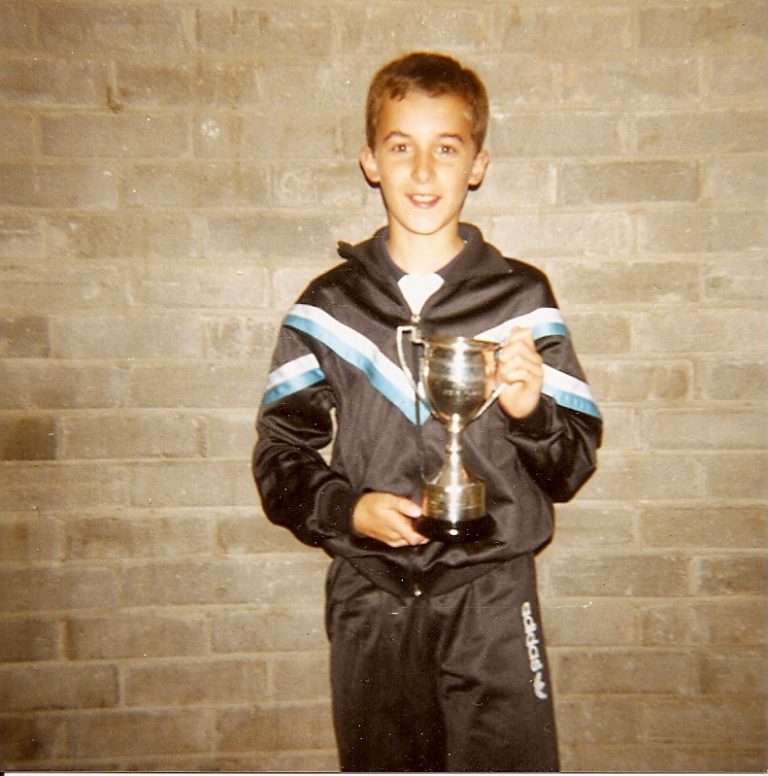
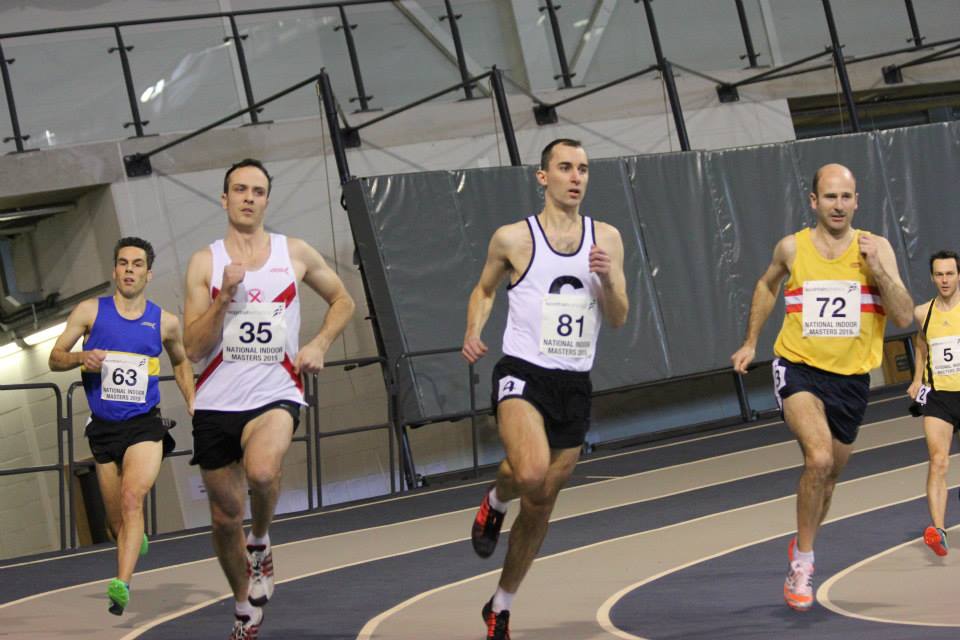
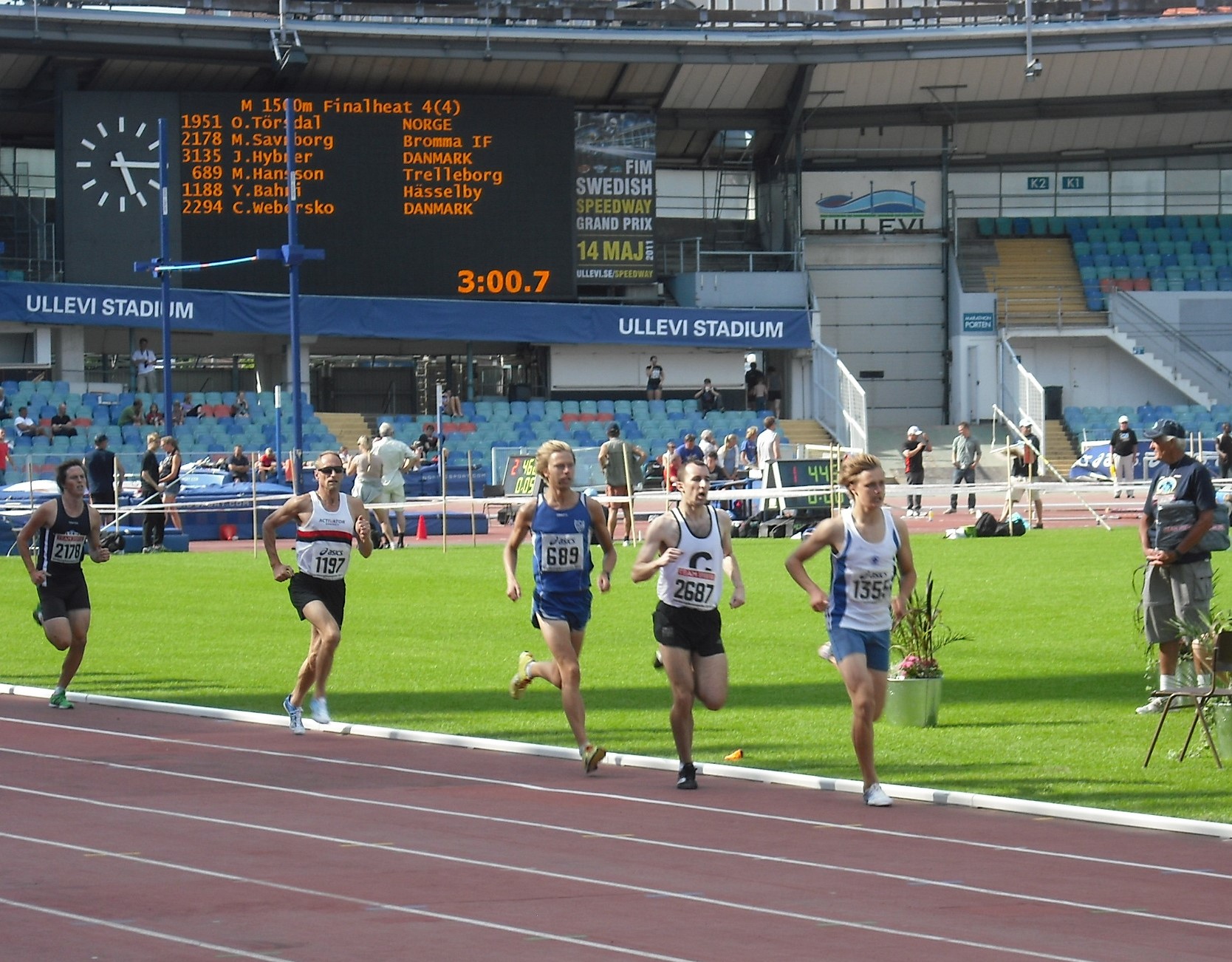
Scottish Masters Outdoor Championships
| Year | Age Group | Event | Position | Time |
| 2013 | M35 | 800m | 1st | 2:02.96 |
| 2014 | M35 | 800m | 1st | 2:02.80 |
| 2015 | M35 | 800m | 2nd | 2:05.80 |
| M35 | 1500m | 2nd | 4:32.13 | |
| 2016 | M35 | 800m | 1st | 2:05.84 |
| M35 | 1500m | 2nd | 4:29.83 | |
| 2017 | M35 | – | – | – |
| 2018 | M40 | 800m | 1st | 2:07.44 |
| M40 | 1500m | 5th | 4:34.88 | |
| 2019 | M40 | 400m | 2nd | 56.56 |
| M40 | 800m | 2nd | 2:06.58 |
British Masters Athletic Federation
| Year | Age Group | Event | Position | Time |
| 2013 | M35 | 800m | 3rd | 2:04.2 |
| 2014 | M35 | 800m | 1st | 2:02.31 |
| 2015 | M35 | 800m | 3rd | 2:03.98 |
| 2016 | M35 | 800m | 4th | 2:01.98 |
| 2017 | M35 | – | – | – |
| 2018 | M40 | 800m | 3rd | 2:05.07 |
| 2019 | M40 | 800m | 4th | 2:06.47 |
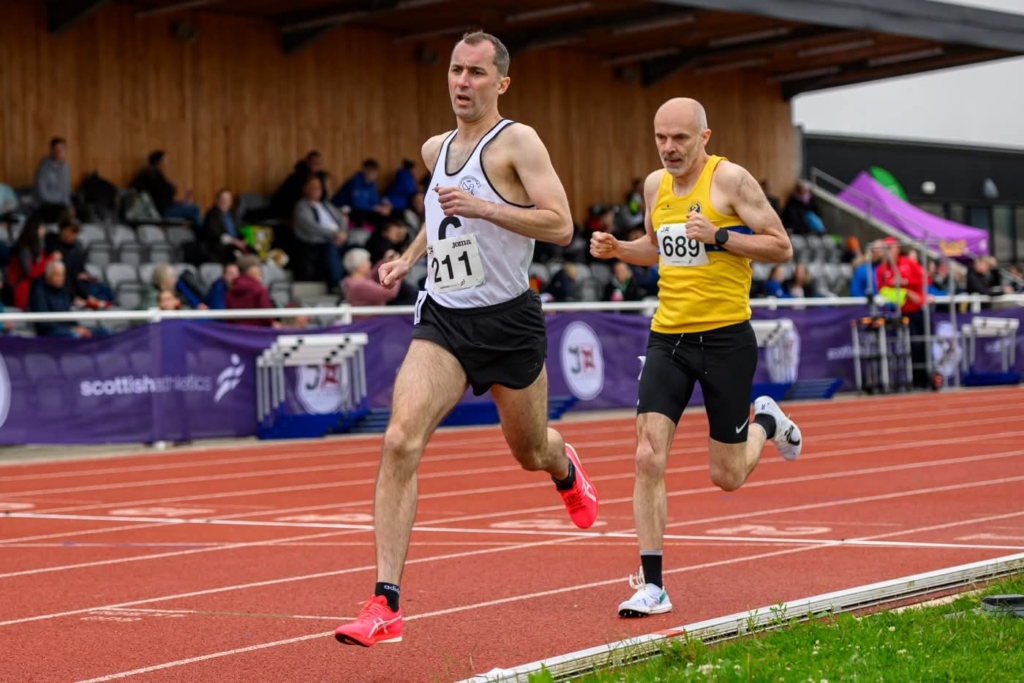
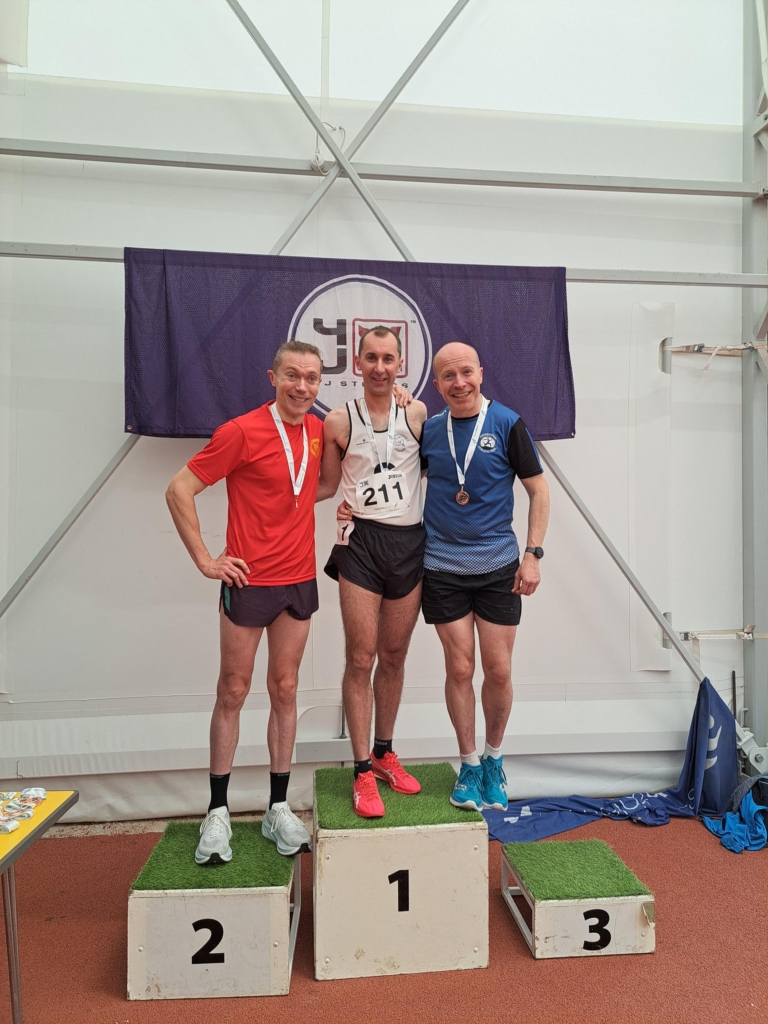
Iain in 2025 Scottish Masters indoor championships
Iain’s performances on the track as a Masters athlete, right from the beginning as an M35 to date have been excellent and they show no signs of letting up. This year, 2015 as a MV45, he has raced in the Scottish |Masters Indoor Championship on where he was second in the 800m in 2:12.90 and fourth in the 1500m in 4:46.48. Later in the year, 27th July, he had a double first – 800m in 2:11.01 and 1500m in 4:38.80. See the picture below.
Where does he go from here? When asked about his future in the sport Iain was clear that he wanted to carry on running but maybe not the intense competition of Track League matches. In all probability he tells us he will run in park runs, over the country and on the roads – the question is whether he will compete in veterans races.